

Oscillate and Rotate
Kneader

Pioneer in
Technology
TEX Series
Extruder

Specialized in
Technology
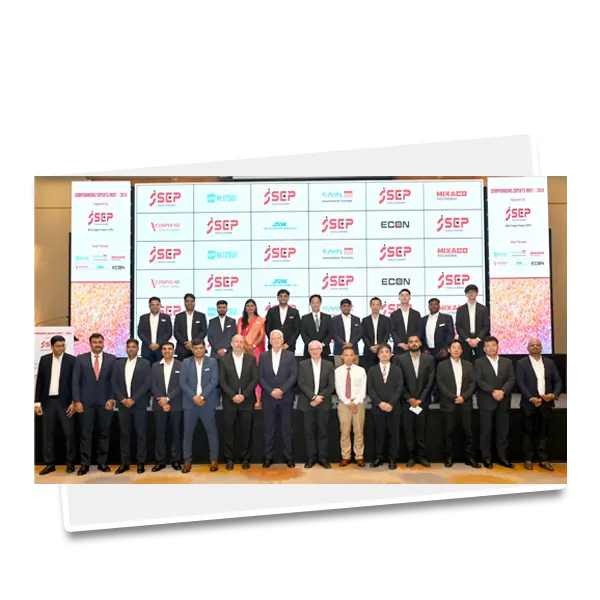
Event
Expert Meet


Industrial Heating Cooling Mixer
High-performance heating cooling mixer systems engineered for PVC dry-blend, powder compounds, and specialty formulations. Deliver consistent, homogeneous batches — cycle after cycle.
Two Configurations. Unlimited Capacity.
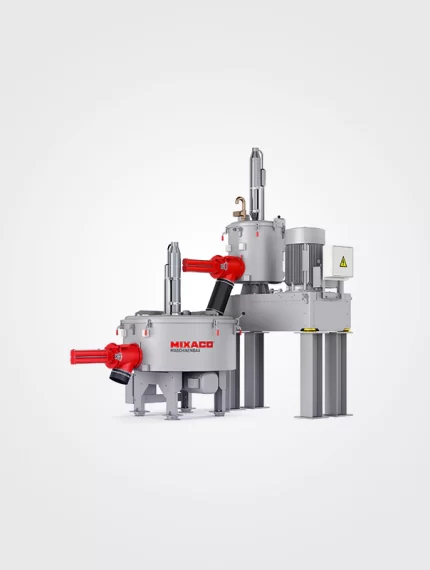
Heating/Cooling Mixer - Vertical
Throughputs up to 3,000 kg/h
The vertical heating cooling mixer combines an upright high-speed heating mixer directly coupled with a jacketed vertical cooling mixer below. Ideal for compact plant layouts requiring medium-to-high output PVC dry-blend production.
- Vertical cooling mixer positioned directly under the heating unit
- Gravity-fed discharge — no product residue accumulation
- Double-walled heating vessel as standard
- Throughput capacity up to 3,000 kg/h
- Compact footprint — suitable for space-limited facilities
- ATEX version available for explosive atmospheres
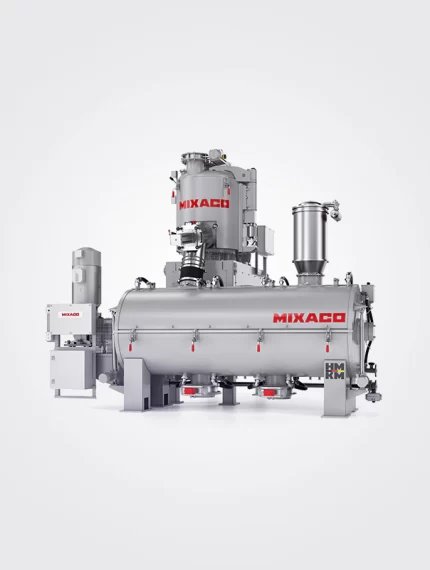
Heating Mixer with horizontal Cooling Mixer HM + KMH.
Throughputs up to 8,000+ kg/h
The HM + KMH configuration pairs a vertical high-speed heating mixer with a horizontal plough-type cooling mixer. This combination is designed for large-scale, high-output industrial operations demanding maximum production efficiency with superior thermal control.
- Horizontal cooling mixer (KMH) delivers faster cooling cycles
- Suited for very large batch volumes and high production rates
- Throughput capacity exceeding 8,000 kg/h
- Plough-type mixing tools for gentle, efficient cooling
- Ideal for large-scale PVC compound and masterbatch plants
- Fully integrated control system with Siemens S7-1500 PLC
Key Features of Heating Cooling Mixers
| Feature | Description |
|---|---|
| High-Speed Mixing Tools | Process-optimized mixing tools are designed for specific applications — heating, agglomerating, or bonding. Quick-change tool systems minimize downtime during product changeovers. |
| Double-Walled Heating Vessel | The heating mixer vessel is always double-walled, allowing full insulation to maximize energy efficiency and maintain stable processing temperatures across every batch. |
| Integrated Aspiration System | An innovative internal aspiration system with targeted airflow ensures optimal evacuation of dust and moisture, preventing hygroscopic stabilizer deposits that cause defects in the extruder and end product. |
| Siemens S7-1500 PLC Control | The control system is built on the Siemens S7-1500 platform with a 12" Siemens TP1200 color touchscreen, offering intuitive operation, up to 99 storable mixing programs, and optional remote maintenance access. |
| No Deposit Formation | Engineered specifically to prevent stabilizer deposits in PVC formulations, particularly with hygroscopic stabilizers — protecting extruder performance and ensuring defect-free end products. |
| Extensive Customization Options | Configured to your requirements with options including hydraulic tool stroke, deflector plates, dual discharge, contour-shaped discharge valve, swiveling lid, hinged lid, closed-loop heat exchanger, and more. |
| Cooler Weighing System | Optional load cell integration on the cooling mixer provides precise batch weight measurement and process data recording for full traceability and quality management. |
| ATEX Certified Versions | For hazardous environments and combustible powder applications, full ATEX-certified versions of the heating cooling mixer are available, meeting the strictest safety regulations. |
| Cloud Monitoring Ready | Integrate the heating cooling mixer into your Industry 4.0 infrastructure with optional cloud monitoring, real-time data recording, remote diagnostics, and performance analytics. |
Technical Specifications
| PARAMETER | VERTICAL HCM | HM + KMH HORIZONTAL |
|---|---|---|
| Configuration | Vertical Heating Mixer + Vertical Cooling Mixer | Vertical Heating Mixer (HM) + Horizontal Cooling Mixer (KMH) |
| Max. Throughput | Up to 3,000 kg/h | 5,000+ kg/h |
| Vessel Construction | Double-walled, full insulation possible | Heavy-duty fabricated steel; water-jacket all-round |
| Cooling Method | Water-jacketed vessel; slow-speed agitation | Water-jacketed horizontal vessel: plough mixing tools |
| Drive | Performance-optimized electric motor; IE3 energy efficiency | High-efficiency motor; variable speed control optional |
| ATEX Version | Available on request | Available on request |
Wide Range of Applications
| APPLICATIONS | HOW IT WORKS |
|---|---|
| PVC Dry-Blend Production | The primary application — homogeneous incorporation of all additives (stabilizers, lubricants, fillers, pigments) into PVC resin at defined process temperatures for consistent dry-blend quality. |
| Agglomeration | Controlled agglomeration of fine powder fractions to improve bulk density, flowability, and processability in downstream handling and extrusion operations. |
| Pigment & Additive Bonding | Bonding liquid additives, waxes, or pigments onto carrier particles (e.g., carrier granules) using the heating stage to create homogeneous surface coatings without separate equipment. |
| Compound Homogenization | Pre-mixing and homogenization of multi-component polymer formulations before extrusion compounding, improving dispersion quality and reducing extruder residence time. |
| Powder Coating Premix | Preparation of thermosetting powder coating premixes — combining resins, hardeners, flow agents, and pigments under controlled temperature for uniform pre-dispersion. |
| Building Material Compounds | Mixing of dry mortar, cementitious compounds, tile adhesives, and technical building material formulations requiring controlled blending and de-aeration. |
Generating more value at every level and building long lasting relationship with customers
Years of Experience
Completed Projects
Brand Collaboration
Worldwide Reach
Industries We Serve
PVC
Processing
Powder
Coatings
Masterbatch
Battery
Materials
Feedstuff
and Food
Building
Materials
Specialty
Chemicals
Rubber & Elastomers
Technical
Ceramics
Plastics & Compounds
Frequently Asked Questions About Heating Cooling Mixers
1. What is a heating cooling mixer and how does it work?
A heating cooling mixer is a two-stage industrial mixing system used primarily for PVC dry-blend production and similar powder compounding processes. In the first stage, a high-speed heating mixer uses mechanical friction and shear forces to rapidly heat the material, ensuring complete homogenization and additive absorption at the defined process temperature. Once the batch reaches the target temperature, it is automatically discharged into the cooling mixer, where water-jacketed vessel walls and slow-speed agitation rapidly reduce the temperature to a safe discharge level, preventing agglomeration and ensuring excellent product flowability. The entire process is automated via a PLC-based control system.
2. What is the difference between a vertical and horizontal heating cooling mixer?
The key difference is the cooling mixer orientation and the resulting throughput capability. In a vertical heating cooling mixer, the cooling mixer is positioned vertically below the heating mixer, using gravity feed and a relatively compact footprint — suitable for throughputs up to 3,000 kg/h. The horizontal heating cooling mixer (HM + KMH) pairs the vertical heating mixer with a horizontal plough-type cooling mixer, which offers faster and more effective cooling for larger batch volumes, enabling throughputs exceeding 8,000 kg/h. The horizontal configuration is preferred for large-scale industrial PVC and compound plants where maximum output is the priority.
3. Which industries use heating cooling mixers?
Heating cooling mixers are widely used across numerous process industries. The most significant application is PVC processing for rigid and flexible profiles, pipes, cables, and flooring. They are also essential in powder coating and bonding, masterbatch and color concentrate production, specialty plastics and compound manufacturing, rubber processing, battery material preparation, building material compounds (dry mortar, tile adhesive), and food and feedstuff processing. Essentially, any industry requiring controlled thermal batch mixing with precise temperature management can benefit from a heating cooling mixer system.
4. Can a heating cooling mixer be used for products other than PVC?
Absolutely. While the heating cooling mixer is the standard machine for PVC dry-blend production, it is equally effective for a wide range of other applications. These include agglomeration of fine powders, bonding of liquid additives and waxes onto carrier particles, homogenization of multi-component polymer compounds, powder coating premix production, processing of thermoplastic elastomers, preparation of battery electrode materials, and mixing of specialty chemical formulations. The process parameters — temperature, speed, time, and additive injection — can all be precisely adjusted and stored in programs to match each product’s specific requirements.
5. Is an ATEX-certified heating cooling mixer available for explosive dust environments?
Yes. ATEX-certified versions of the heating cooling mixer are available for applications involving combustible dust or potentially explosive atmospheres. These machines comply with relevant ATEX directives and are engineered with appropriate electrical components, grounding, shaft sealing, and dust containment features to meet zone classification requirements. If your process involves materials classified as explosible dusts (such as certain polymer powders, organic chemicals, or metal powders), we recommend discussing your specific ATEX zone classification requirements during the inquiry process so the correct machine configuration and certification level can be specified.
Get in Touch
Request a Quote for Your Heating Cooling Mixer
Tell us about your mixing requirements and our engineering team will recommend the right configuration, capacity, and options for your production process.